HREA / Education and training in support of human rights worldwide HREA celebrates 15 years
About Us | HREA News | E-Learning
Learning Centre Resource Centre Networks
Spanish French Russian Russian German Portuguese Italian Chinese Arabic
 
HREA Online - December 2006


IN THIS ISSUE


HREA 1996-2006: Celebrating 10 Years!

  • From the HREA staff: HREA 1996-2006
  • Annual Appeal 2007
  • Youth for Human Rights training programme for Arab activists under way
  • HREA prepares guide on paralegal programming
  • Public chat session on prolongued human rights crisis in Chechnya


    FROM THE HREA STAFF: HREA 1996-2006


    Dear Colleagues and Friends,

    HREA celebrated its 10th anniversary on 21 October. It seems like yesterday that we conceived of an organisation that would be completely dedicated to education and training in human rights. HREA was born in Amsterdam in 1996 and, since that time, we've grown from carrying out national, capacity-building programmes to policy and evaluation work, distance learning, and extensive on-line supports for educators and advocates. If you are receiving this e-newsletter, you are part of a network of over 30,000 friends whom we have had contact with over the years. We are so grateful that you are part of this global human rights education community.

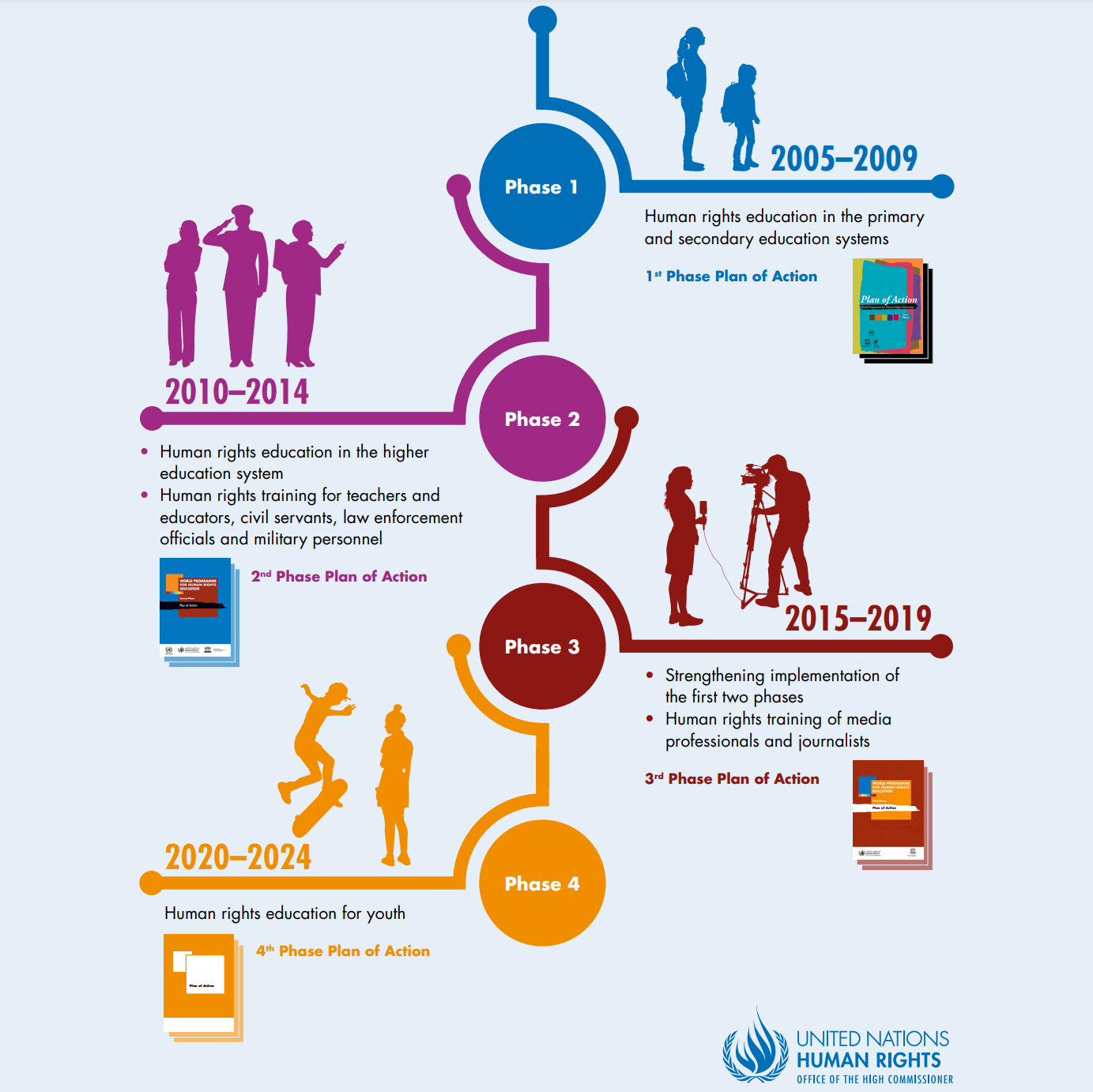
    In 1996, human rights education (HRE) was just beginning to emerge as a viable approach within the international human rights movement. Today, ten years later, HRE has made great strides. We have a permanent World Programme for Human Rights Education and its role in supporting HRE is increasingly recognised. Many of us continue to work on practices that will increase the impact of HRE and the human rights-based approach in all that we do, including education and training. Now, university personnel, development agencies and increasing numbers of government personnel have joined NGOs and UN agencies in recognising the special contribution of the human right framework to our missions. And this trend is bound to continue.

    As HREA enters its 11th year of programme work, we intend to punctuate our efforts with several activities that will highlight our 10th anniversary. We hope that you will be able to join us in these 'celebrations' that are intended to further support your work in human rights education.

    Season's greetings from the HREA Board and staff and best wishes for a terrific 2007,

    Felisa Tibbitts
    Executive Director


    ANNUAL APPEAL 2007


    HREA needs your support! Each year HREA offers over 100 scholarships (tuition waivers) to human rights defenders from Africa, Asia, Eastern Europe and Latin America who participate in our highly valued training programmes. We cannot do this without your financial contributions. Please donate today.

    Learn more about our courses and the amazing human rights activists and educators that participate in them, and make a financial contribution!


    YOUTH FOR HUMAN RIGHTS TRAINING PROGRAMME FOR ARAB ACTIVISTS UNDER WAY


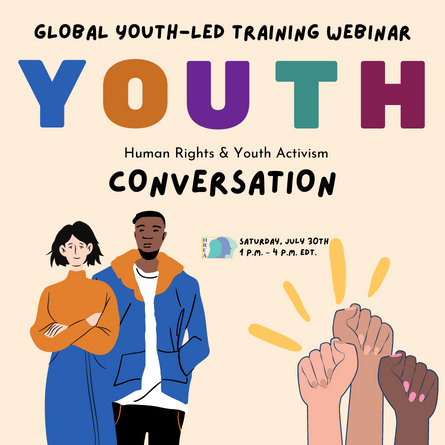
    Eighty young human rights defenders from the Middle East started in early December an e-learning course on human rights advocacy. This distance learning course is part of a year-long training programme, "Youth for Human Rights", that provides intensive training and support for young human rights defenders in the Arab World in order to increase advocacy and monitoring capacity and foster regional networking.
  •  


    Youth for Human Rights
    The distance learning course on human rights advocacy will be followed by a five-day intensive regional workshop on human rights advocacy in Tunis (Tunisia), a 3-month distance learning course on human rights monitoring and will be concluded with a five-day in-person workshop on human rights monitoring in Cairo (Egypt). Self-study of international and regional human rights standards and mechanisms is also part of the programme. During the programme the young human rights activists from Algeria, Bahrain, Comoros, Djibouti, Egypt, Iraq, Jordan, Kuwait, Lebanon, Libya, Mauritania, Morocco, Oman, Palestine, Qatar, Saudi Arabia, Somalia, Sudan, Syria, Tunisia, Yemen and United Arab Emirates will receive on-going support from a mentor. "Youth for Human Rights" is jointly organised by the Arab Institute for Human Rights (AIHR), the Cairo Institute for Human Rights Studies (CIHRS) and HREA. Read further.


    HREA PREPARES GUIDE ON PARALEGAL PROGRAMMING


    HREA is working closely with directors of paralegal programmes in five countries in developing a manual on how to initiate community-based paralegal programmes. In the community-based paralegal approach, paralegals address problems as generalists, offering a range of skills that can be applied to a situation. Sometimes the solution may be a formal legal one. Other times, the paralegal may offer administrative assistance to promote access to social services, or become involved in mediation or negotiation. "Paralegal programmes like these can offer empowering and effective solutions to community problems that promote access to justice", said HREA's director, Felisa Tibbitts.

    Paralegals working in countries like Cambodia, Hungary, Sierra Leone and South Africa address a range of problems with individual clients and communities. The manual that HREA is developing addresses the basic steps in initiating and maintaining a programme, including: environmental assessment; programme planning; materials development and training; supporting and monitoring field offices; and evolving the programme.

    HREA's work on the manual is supported by the Open Society Justice Initiative. The manual is scheduled for publication in spring 2007.


    PUBLIC CHAT SESSION ON PROLONGUED HUMAN RIGHTS CRISIS IN CHECHNYA


    Portrait of 'disappeared' in Chechnya. Copyright © Human Rights Watch
    On 19 October, HREA organised a public chat session on the human rights crisis in Chechnya. Russian human rights defenders and experts from the International Helsinki Federation for Human Rights (IHF) responded to questions about the background of the conflict, the nature of the human rights violations, and efforts undertaken by international organisations like the Organization for Cooperation and Security in Europe (OSCE) to end the conflict, among other topics.

    Ten years after the catastrophic 1994-1996 war, which killed almost 100,000 people and reduced the capital of Grozny to rubble, the armed conflict in Chechnya still continues. Both parties in the conflict, the Chechnyan rebels and the Russian authorities and army, continue to violate human rights and humanitarian law, including acts of torture, extrajudicial executions and disappearances. Civilians have been the prime victims of this armed conflict, which started in 1993 when Chechnya wanted to break away from the Russian Federation.

    ----------------------------------------------

    Question by Edouard (USA):

    As survivor of the Tutsi Genocide in Rwanda I have witnessed the failure of the international organizations in the prevention of the genocide of Tutsi in Rwanda. Today we are experiencing the same failure in Sudan. Do you believe the intentional organizations have power to solve or to prevent conflicts? If you believe it why this prolonged human rights crisis in Chechnya? If not what is the cause of the failure of these international organizations in preventing or solving the conflicts?

    -----

    Krassimir Kanev answers:

    Dear Edouard,

    I do believe that the international community is able to prevent genocides and other crimes against humanity. I can give the recent example of Kosovo where the successful intervention of NATO in 1999, although questionable from a legal point of view, prevented serious atrocities that would probably have taken place on that territory. It is however obvious that its willingness depends on a number of factors - power structure at the decision-making level, economic and political interests, racial prejudices etc. It is in this sense clear that its ability to deal with the crisis in Russia is much less than e.g. in the case of Kosovo. Russia is a permanent member with a right of veto of the UN Security Council, which, at least in theory, should take the decision for any measures, economic or military, to make them legal. It is a country of huge natural resources, such as oil and natural gas, which it sells to many other countries of Europe. For a number of political and economic reasons it has also influence in many countries of Asia and Africa. And, last but not least, it has a big military potential. So, under these conditions it is hard to imagine how the international community, reluctant as it was and continues to be to intervene in Rwanda and Sudan, would be willing to intervene in any way against Russia. Its response to the Chechen crisis is perhaps the clearest reflection of the inherent injustices of the present system of international security and protection of human rights.

    ----------------------------------------------

    Question by Rowland (Botswana):

    What role is the United Nations playing in settling this problem and addressing the human rights concerns?

    -----

    Joachim Frank answers:

    Dear Rowland,

    The United Nations did not play any role in settling the second Chechen war. Not only was there no resolution by for example the UN Security Council – where Russia of course has veto power – but to my knowledge there was also no effort by any country to bring the conflict on the its agenda.

    The human rights concerns were addressed in two resolutions of the UN Commission on Human Rights in 2000 and 2001. In the following three years tabled resolutions were rejected, and in 2005 no resolution was tabled. However, the previous and the present UN High Commissioners for Human Rights visited the conflict region one time each and afterwards addressed the grave human rights situation there with very clear messages to the Russian authorities. Some of the Working Groups (for example the one on Enforced Disappearances), Special Procedures, as well as the Committee Against Torture, are trying their best to address the problems. [For an overview of the various UN human rights bodies, please see the study guide on The United Nations Human Rights System, Mod.]

    On the humanitarian side the UN institutions – the United Nations Office for Coordination of Humanitairian Affairs (OCHA), UNHCR, UNICEF, World Food Program (WFP), the World Health Organisation (WHO) and others - are doing very much on the ground.

    Joachim

    ----------------------------------------------

    Question by Asya (Bulgaria):

    My question is very simple: Why absolutely no one talks about the crisis situation outside Internet??; on TV and newspaper there is not a word. And also why no one helps refugees and survivors of this absurd war? Thank you in advance.

    -----

    Krassimir Kanev answers:

    Dear Asya,

    This is one of the major problems with the Chechnya crisis and, at the same time, one of the causes for its persistence. The reasons why Western media write on Chechnya very rarely are several:
    * The ongoing campaign on the "fight against terrorism" which often goes hand in hand with implicating Muslims, including the Chechens, as terrorists;
    * The success of the Russian official propaganda in presenting the Chechen conflict through the prism of the fight against terrorism in the first place, also in the West, particularly after the Dubrovka and Beslan events;
    * Difficulties for Western journalists to travel to Chechnya to engage in investigative journalism;
    * Lack of vision for a realistic course of action that would lead to a satisfactory solution, belief that "you can't do anything with the Russians";
    * Inaction of the Western politicians and international organizations - there are no initiatives, no events going on that need to be covered.

    There are some organizations that help refugees and survivors from the war. The Danish Refugee Council operates for many years now in Northern Caucasus. Several NGOs, including the Russian Justice Initiative, Memorial, as well as a number of human rights groups in North Caucasus help victims bring their cases to the justice system. There have been several judgments of the European Court of Human Rights on cases that originated from the conflict in Chechnya. Many more are pending.

    ----------------------------------------------

    Question by Bernard (Uganda):

    What strategies are we putting in place to hold Russian and Chechen rebel commanders accountable for gross human rights abuse? What are our options: the ICC [International Criminal Court, Mod.], the European Court of Human Rights?

    -----

    Ole Solvang answers:

    Dear Bernard,

    Thank you for your question. The first question that needs to be decided is what the nature of the conflict is. It has been clearly established that the first Chechen war (1994-1996) was a conflict of non-international nature and therefore fell under common article 3 of the Geneva Conventions and Additional Protocol 2 (and even a Russian Constitutional Court decision of 1995). Because of the many similarities between the first and the second war, I think few would disagree with calling the second war a conflict of non-international nature.

    This leaves us with several options for holding Russian and Chechen rebel commanders responsible for gross human rights violations, which I will present shortly in a separate message.

    ----------------------------------------------

    Question by Tanya (Moldova):

    I have two questions: 1. Is there a peaceful opposition group that the Russian government could negotiate with? 2. What do you think it will take for the hostilities, on all sides, to come to an end?

    -----

    Eliza Moussaeva and Joachim Frank answer:

    Dear Tanya,

    It would be good if there would be a peaceful opposition group in Chechnya with whom the Russian government could negotiate. However, there is no possibility at the moment in Chechnya for a peaceful opposition, as there is no possibility for a free democratic process. Groups who would advocate separatism, even when they do would it with peaceful means, would immediately be cruelly targeted.

    If the Russian government would want to negotiate, they would have had a very good opportunity to do it with former Chechen President Aslan Maskhadov. But instead they killed him. And if the Russian government would want negotiations now, they still could do it, for example via the envoy of the armed fighters, Akhmed Zakaev.

    So far, the only method used by the Russian government is brutality, first by its own forces, then mainly via the local Kadyrovtsy.

    Joachim and Eliza

    ----------------------------------------------

    The full text of the conversation about Chechnya, both in English and Russian, can be found on HREA's website.


    back to top
    Bookmark and Share
    Also available in:
    العربية
    Français
    HREA Trainings
    HREA Publications
    Subscribe
    Enter your email address to subscribe to HREA mailing lists.
    RSS Feeds

    Upcoming e-learning courses

    HREA distance learning courses offered in 2007 include a new course on Human Rights Litigation, in addition to our annual courses on Human Rights Advocacy (English & Spanish), Human Rights Monitoring, Rights-Based Programming (English & French), Project Development and Management in the NGO Sector, and courses on the European, Inter-American and United Nations human rights systems. Find out more about these and other upcoming e-learning opportunities.

    Special issue of Journal of Social Science Education

    HREA facilitated a special issue on human rights education of the on-line Journal for Social Science Education. This issue was co-edited by HREA Director Felisa Tibbitts and Dr. Karl-Peter Fritzsche (UNESCO Chair in Human Rights Education at the University of Magdeburg). It includes ten peer-reviewed articles written by practitioners who are engaged in the theory and practice of human rights education. Read further.

    Index 2005-2006 Global HRE List available

    The Index of all messages distributed on the Global Human Rights Education listserv from June 2005 to May 2006 is now available in PDF format. The Global Human Rights Education listserv is a moderated forum on which over 3700 human rights defenders and educators from 160 countries share new resources, methodologies, strategies and lessons learned. Download the Index 2005-2006.

    Teacher development at School for Human Rights

    Through its work at The School for Human Rights, HREA has developed 26 model advisory lessons supporting students' academic success, sense of community and providing engagement with human rights topics. We are now seeking resources to replicate this model advisory programme in other middle and high schools in the New York City area. To see a sample advisory lesson click here.

    Trends in HRE in higher education

    HREA's Director Felisa Tibbitts presented at the Norwegian Human Rights Centre in Oslo on trends in human rights education in higher education. Read further.

    How You Can Help

    HREA supports human rights and educational institutions in transitional democracies to develop human rights curricula and training materials. With your donations we can continue to assist our colleagues in their important work. Find out how you can contribute.

    Tell a Colleague

    If you have colleagues who may be interested in HREA Online, HREA's quarterly e-mail newsletter, please forward this newsletter to them. They can sign up here.

    Accessibility | Copyright | Publications | RSS | Privacy | FAQs